Signed in as:
filler@godaddy.com
Life can get noisy. Mental decompression is about creating a little breathing room — stepping away from the pressure, slowing things down and giving your mind an opportunity to reset.
A walk. Music. Fresh air. Writing things down. A decent brew. Ten quiet minutes. You don't always need a grand solution — sometimes simple, everyday actions can help reduce the mental load and bring you back to the present.
Taking time for yourself isn't about ignoring what's happening. It's about recognising when your head feels overloaded and responding to what you need. Rest, reflect, reconnect — and if things are becoming difficult to manage, reach out for support.

You don’t have to have the perfect words. Sometimes simply telling someone “I’m struggling” can be the beginning of feeling less alone and finding the support you need.
Support can come from friends, family, colleagues or professionals. Asking for help isn’t weakness — it’s recognising that some things are easier to face with someone beside you.
Whatever you’re dealing with, your thoughts and feelings deserve to be heard. Talk. Share. Connect. One conversation might not solve everything, but it can change what happens next.
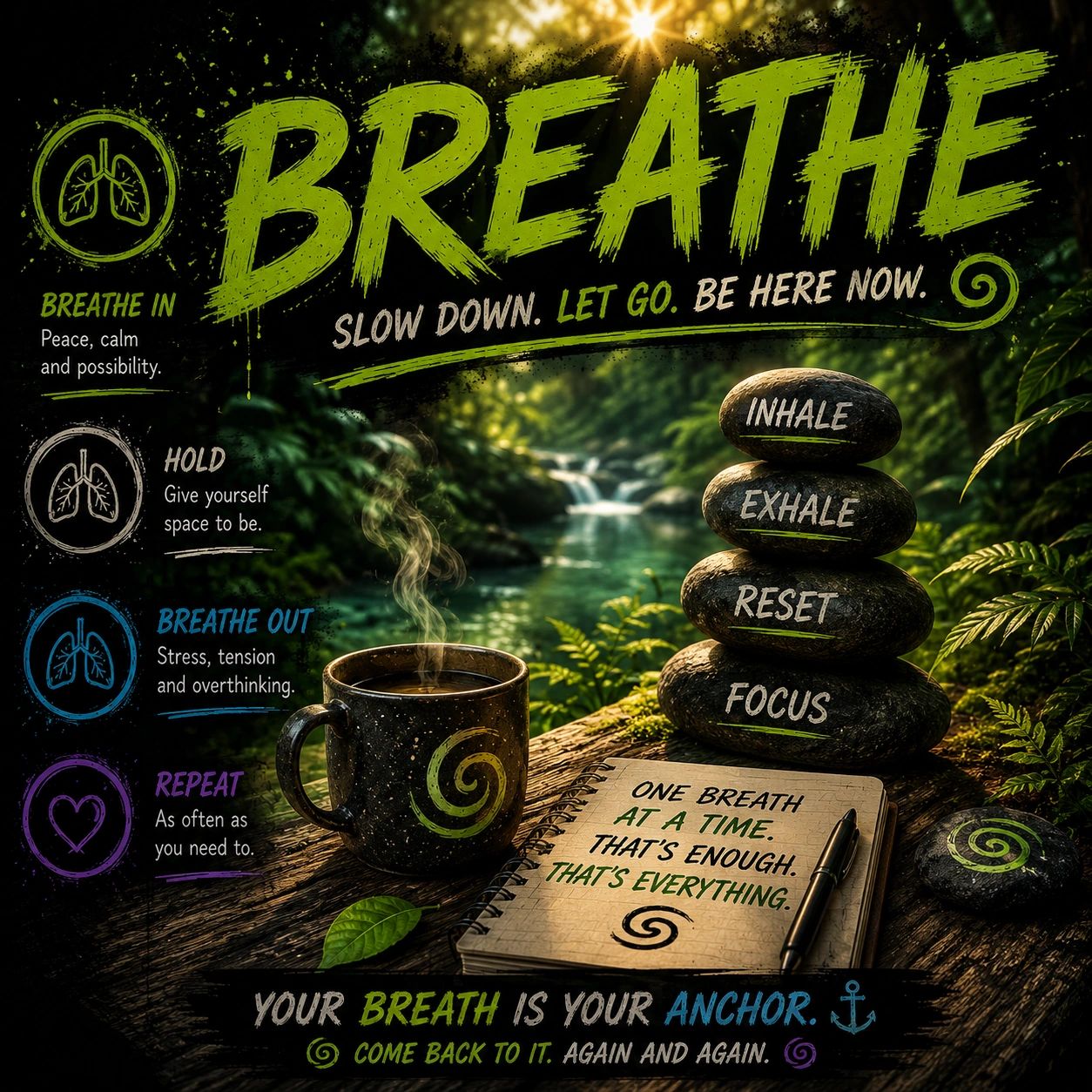
Mental decompression is about giving your mind a chance to slow down and reset. A little space away from constant demands can make everything feel more manageable.
Music, fresh air, writing, breathing, a walk or simply doing something you enjoy. There’s no single right way to decompress — find the small things that help you switch gears.
Looking after your mind doesn’t always require big changes. Sometimes it starts with recognising “I’ve had enough for now” and giving yourself permission to rest, recharge and reconnect with what matters.

Sometimes your mind needs a change of pace. Step away from the noise, slow things down and give yourself some breathing space. Even a few quiet minutes can make a difference.
There’s no perfect way to decompress. Listen to music, write, walk, breathe, create or simply do nothing for a while.Choose whatever helps you feel more grounded.
Looking after yourself doesn’t have to be complicated. A brew, some fresh air, your favourite song or a conversation with someone you trust can be a good place to start.

When everything feels busy, give yourself permission to step away, breathe and reset. You don’t have to keep running at full speed.
Put on some music. Make a brew. Go outside. Write something down. Simple things can create valuable space between you and the noise.
Sometimes decompression means talking. Reach out to someone you trust, share what’s going on and let someone else carry a little of the weight with you.

You don’t have to have everything figured out. Give yourself the same patience, understanding and kindness you would give to someone you care about.
Rest when you need to. Step away when things become too much. Make time for the things that help you feel calmer, grounded and more like yourself.
Notice how you speak to yourself. Celebrate the small wins, forgive the difficult days and remember: being kind to yourself matters too.

You can’t change yesterday and you don’t need to solve tomorrow. Bring your attention back to what’s happening right here, right now.
Look up. Listen. Breathe. Notice the sky, the sounds, the people and the little things you usually rush past. Sometimes the smallest moments are worth noticing most.
When your thoughts start racing ahead, bring yourself gently back to the present. You only need to deal with this moment — the next one can wait.

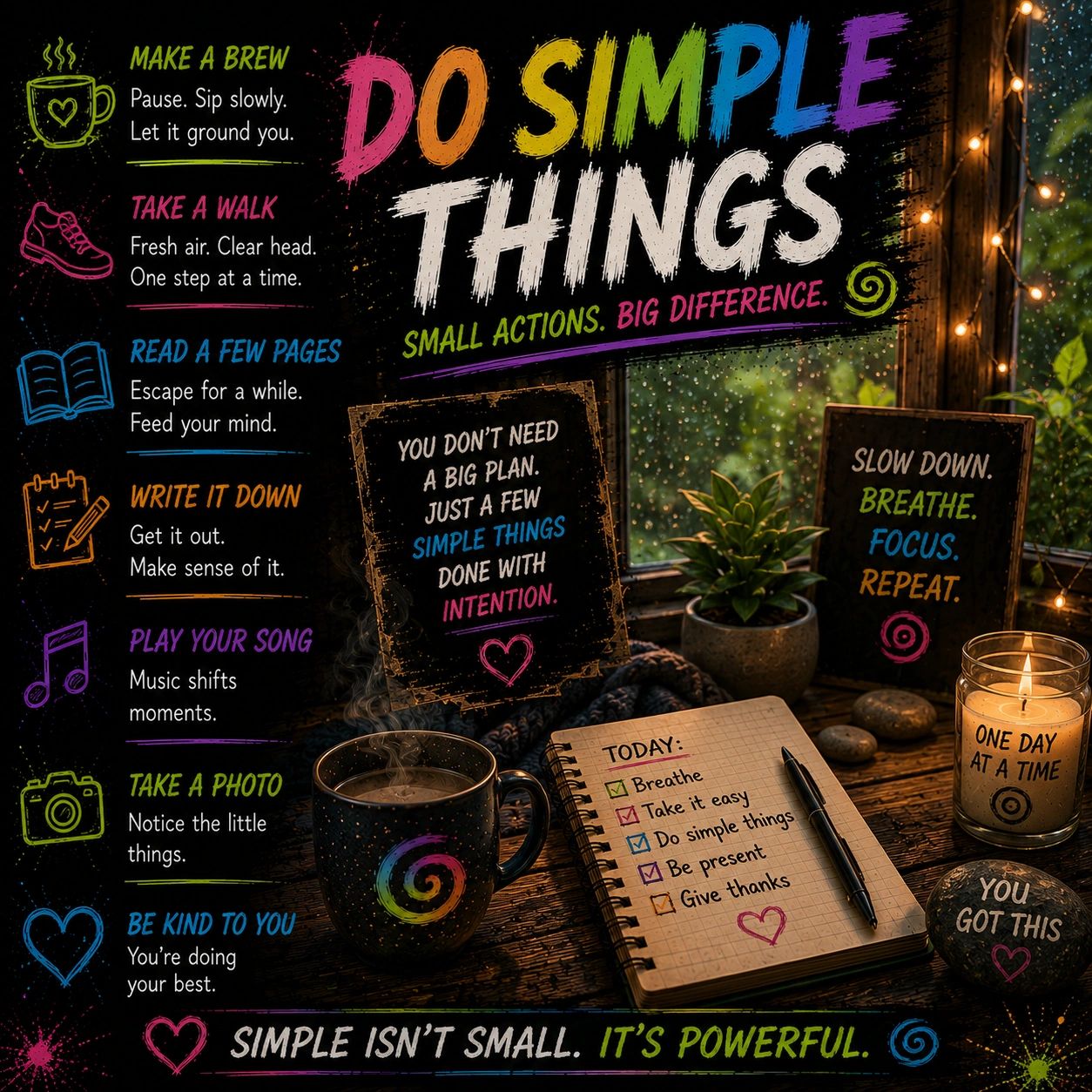
Not everything needs a complicated solution. Make a brew, take a shower, play some music or sit somewhere quiet. Small things can help create a little breathing space.
Go for a walk. Read a few pages. Write something down. Step outside. Sometimes doing one simple thing can shift your focus and change the direction of your day.
You don’t need a huge plan or a perfect routine. Start with something manageable that feels good for you. Simple isn’t insignificant — little actions can make a real difference.
You don’t need the perfect words. Sometimes simply saying “I’m having a difficult time” is enough to open the door to a conversation.
A friend, family member, colleague or professional may be able to listen, understand or help you find your next step. You don’t have to carry everything by yourself.
Talking may not immediately change the situation, but it can change how alone you feel within it. Reach out. Talk. Share. Let someone know you need them.