Signed in as:
filler@godaddy.com
Mental health difficulties can affect anyone. Talking to somebody you trust or reaching out for professional support can help you understand what’s happening, explore your options and find a way forward.
You don't have to wait until things reach crisis point before asking for help. If something doesn’t feel right, it’s worth talking about. Early support can help prevent difficulties becoming more overwhelming and connect you with the right help sooner.
Different people need different kinds of support. Your GP, NHS services, mental health professionals, charities, helplines and local organisations can all be potential starting points. Explore the support links on this page and find the option that feels right for you.

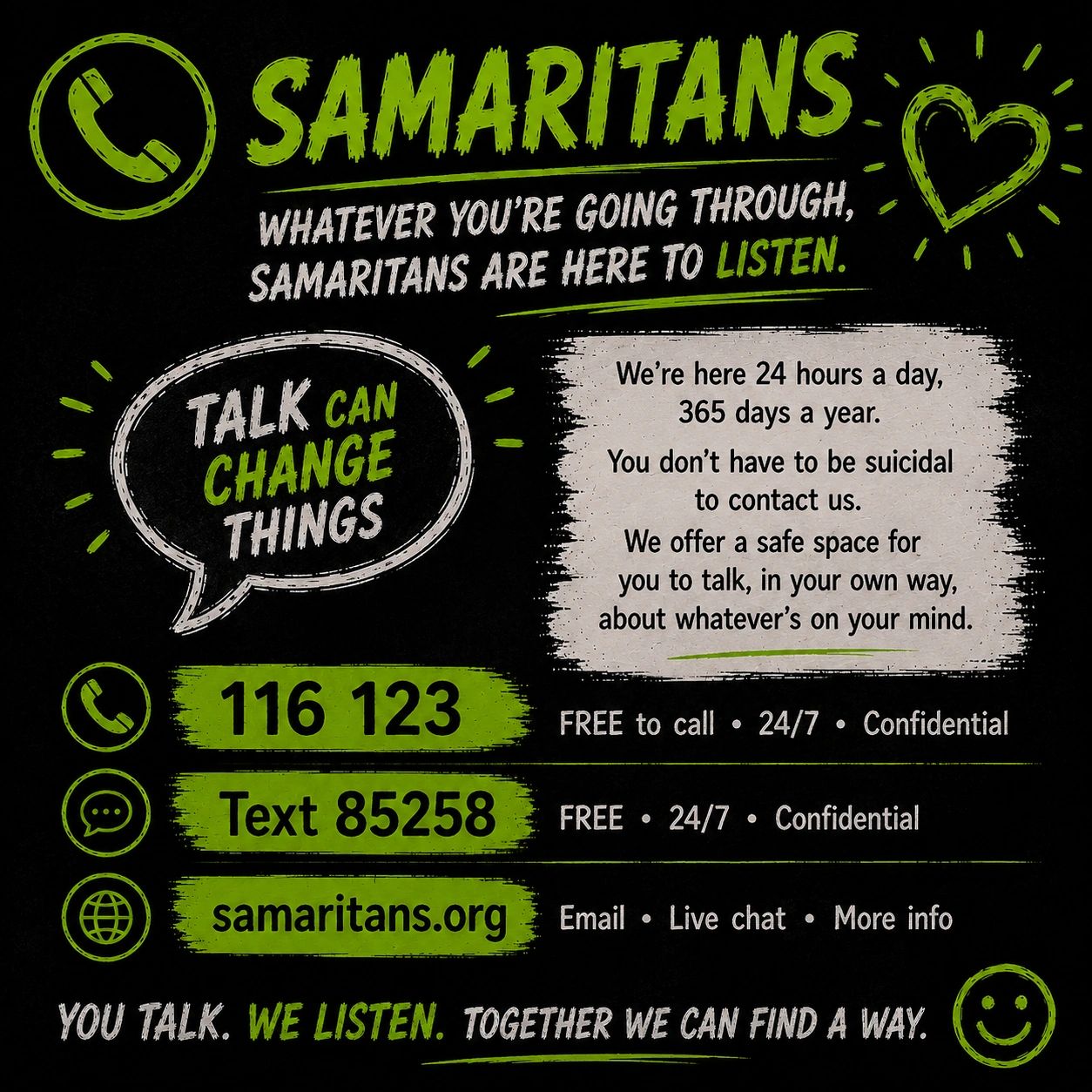
Whatever you’re going through, Samaritans are there to listen without judgement or pressure. You don’t need to be suicidal to contact them — you can talk about whatever is on your mind.
Samaritans are available 24 hours a day, 365 days a year. Call 116 123 free from any phone when you need someone to talk to, whether you’re facing a crisis or simply struggling with life.
You don’t need to know what to say or have everything figured out before you call. A Samaritans volunteer will give you the time and space to talk things through in your own way. Sometimes being heard is an important first step.
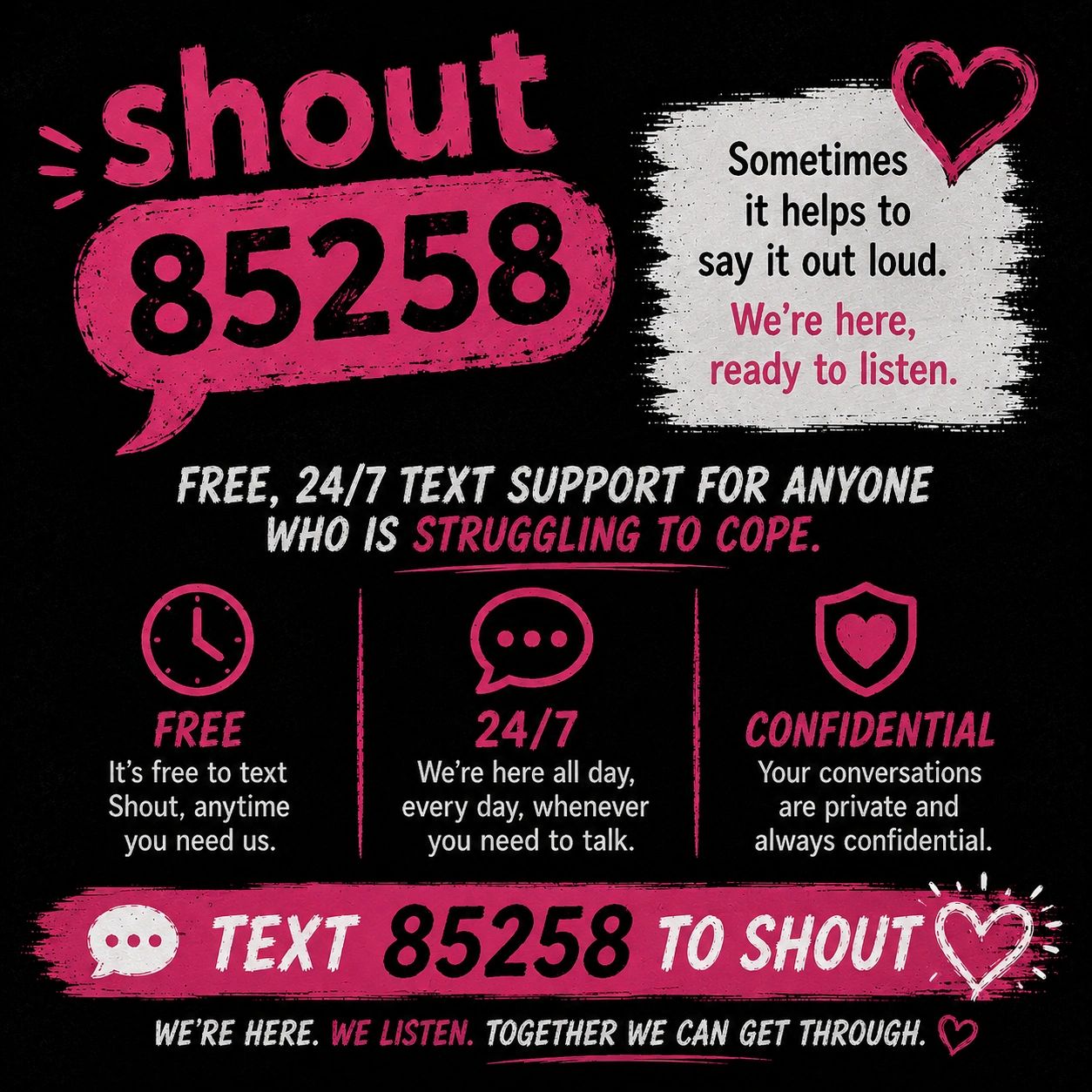
Shout offers free, confidential mental health support by text, 24 hours a day, 7 days a week. It’s there for anyone in the UK who is struggling to cope and would rather communicate by text.
You don’t need to explain everything at once. Simply text SHOUT to 85258 to begin a conversation with a trained volunteer who can listen, support you and help you through a difficult moment.
Whether you’re feeling anxious, overwhelmed, distressed or simply unable to cope, Shout provides a private space to talk about what’s happening. Sometimes sending that first message can be the beginning of things feeling more manageable.
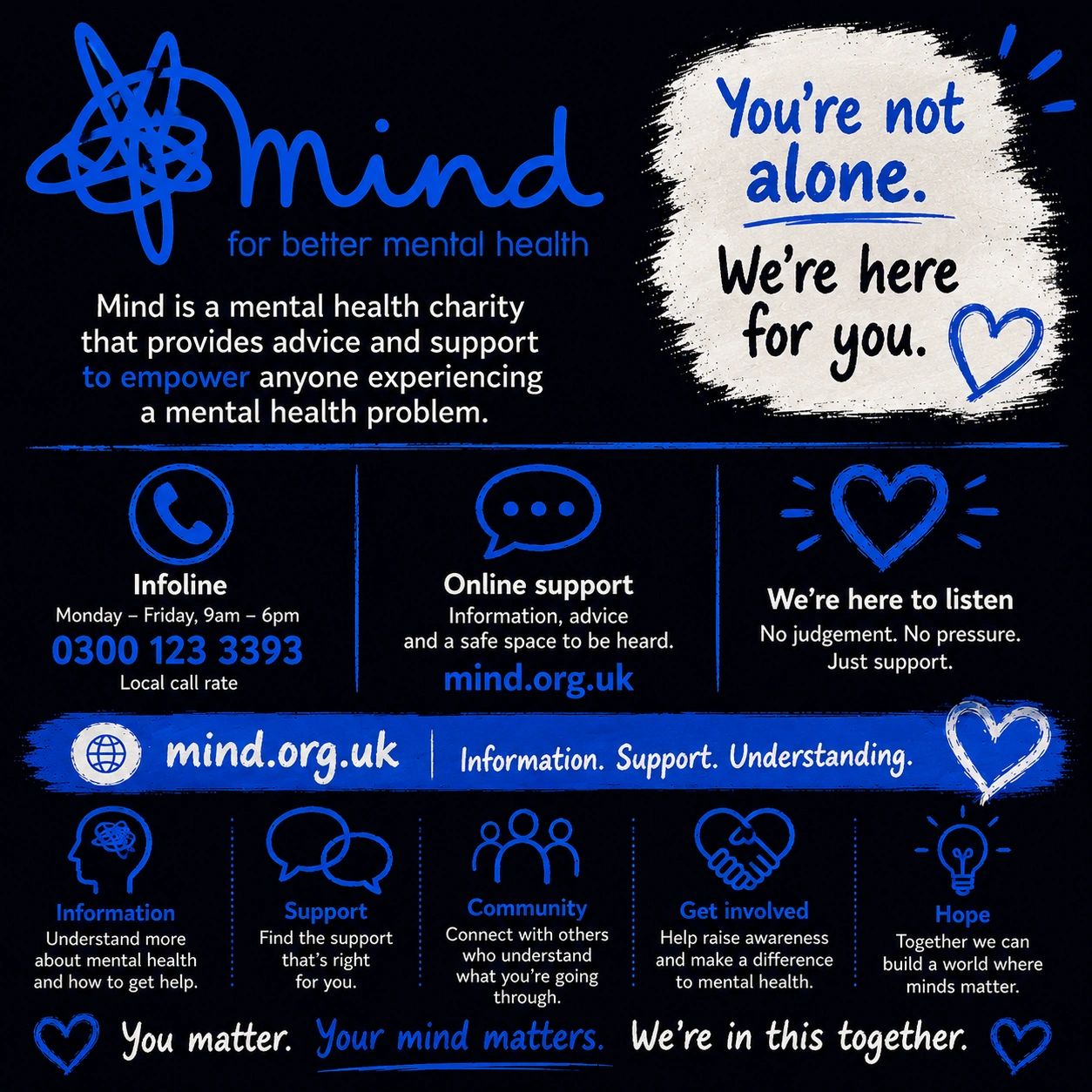
Mind provides clear, accessible information about mental health, including different conditions, treatments, medication, wellbeing and your rights. It can be a useful place to start when you want to understand what you’re experiencing.
Mind offers information and support to people experiencing mental health difficulties, as well as friends, families and carers. Their services can help you understand your options and find appropriate support when you’re unsure where to turn.
Mental health difficulties can sometimes feel isolating, but support is available. Mind works to ensure that people experiencing mental health problems are heard, understood and treated fairly — while challenging stigma and campaigning for better mental health services.
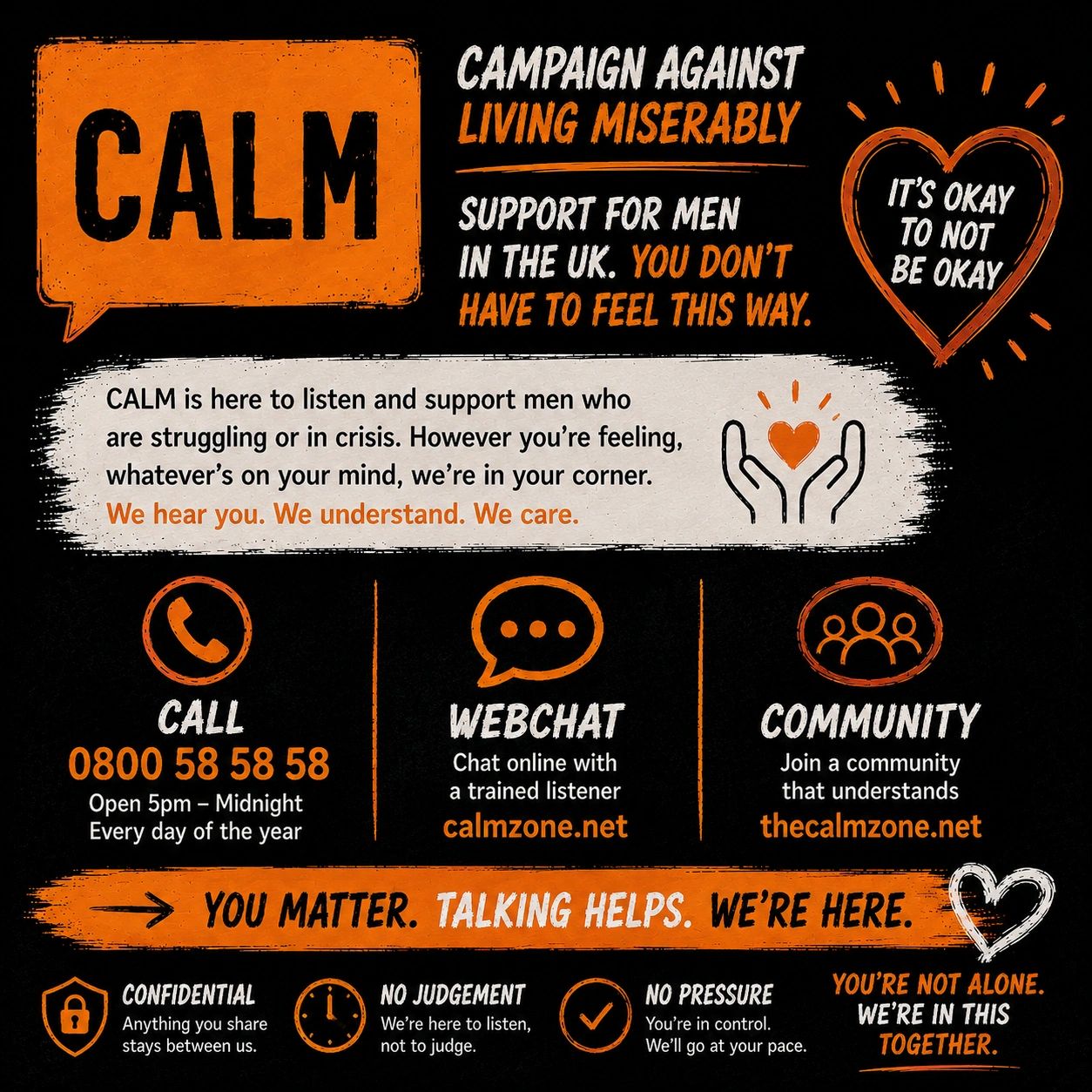
CALM — the Campaign Against Living Miserably — offers support for anyone who is struggling, feeling overwhelmed or finding life difficult. You don't have to wait until you're at crisis point to reach out.
CALM provides free and confidential support through its helpline and webchat, giving you somewhere to talk openly about whatever is happening without judgement or pressure.
CALM works to prevent suicide and challenge the stigma that can stop people asking for help, while encouraging open, honest conversations about mental health. Sometimes talking about what you're carrying can be an important first step.
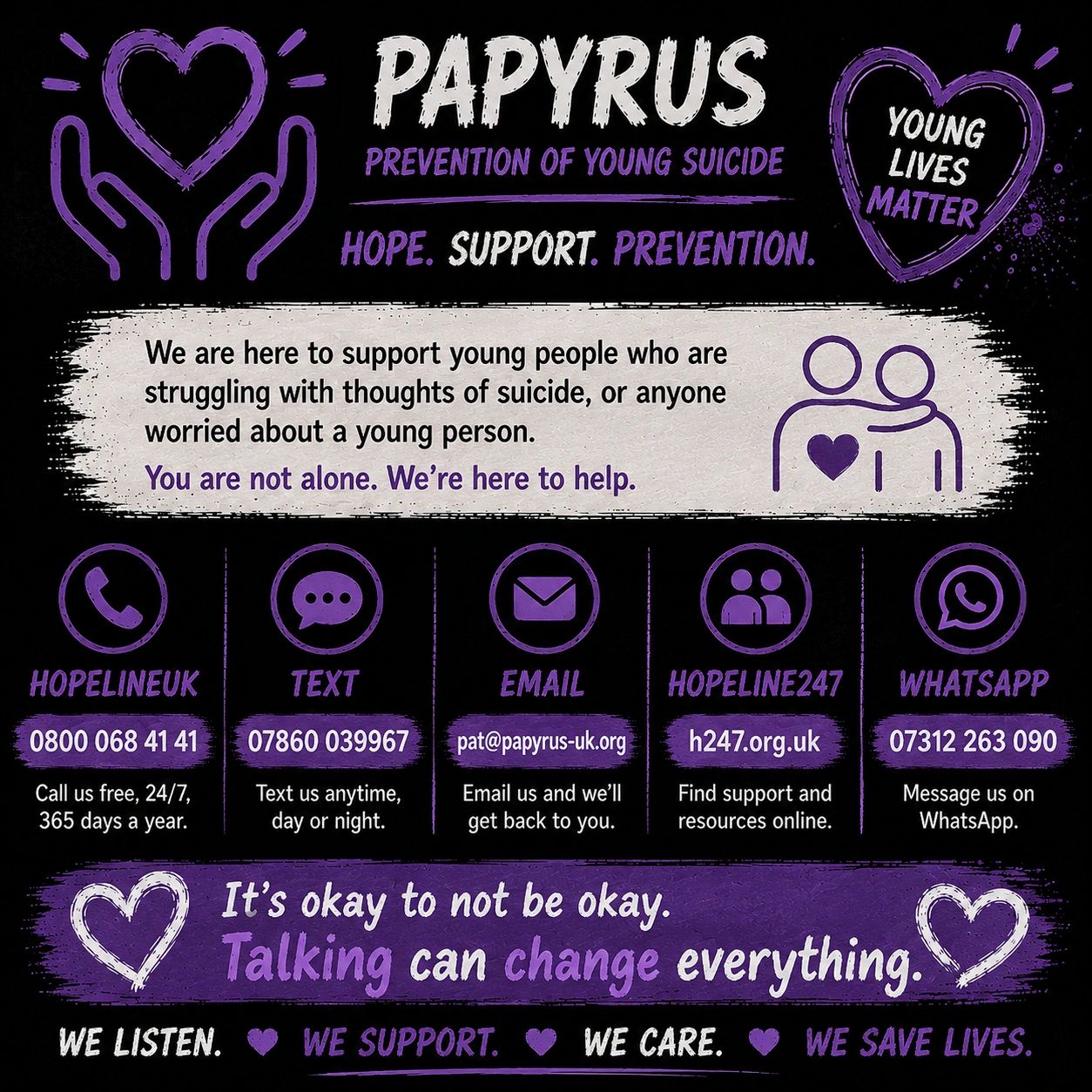
PAPYRUS is a UK charity dedicated to the prevention of suicide and the promotion of positive mental health and emotional wellbeing in young people. It also provides support and guidance to people who are worried about someone else.
PAPYRUS provides confidential support through HOPELINE247, available 24 hours a day, every day of the year. It offers a safe space to talk about thoughts of suicide or concerns that a young person may be at risk.
Talking about suicide can feel incredibly difficult, but PAPYRUS encourages open, direct and compassionate conversations. Its trained advisers can listen, help explore ways to stay safe and support people in finding an appropriate way forward.
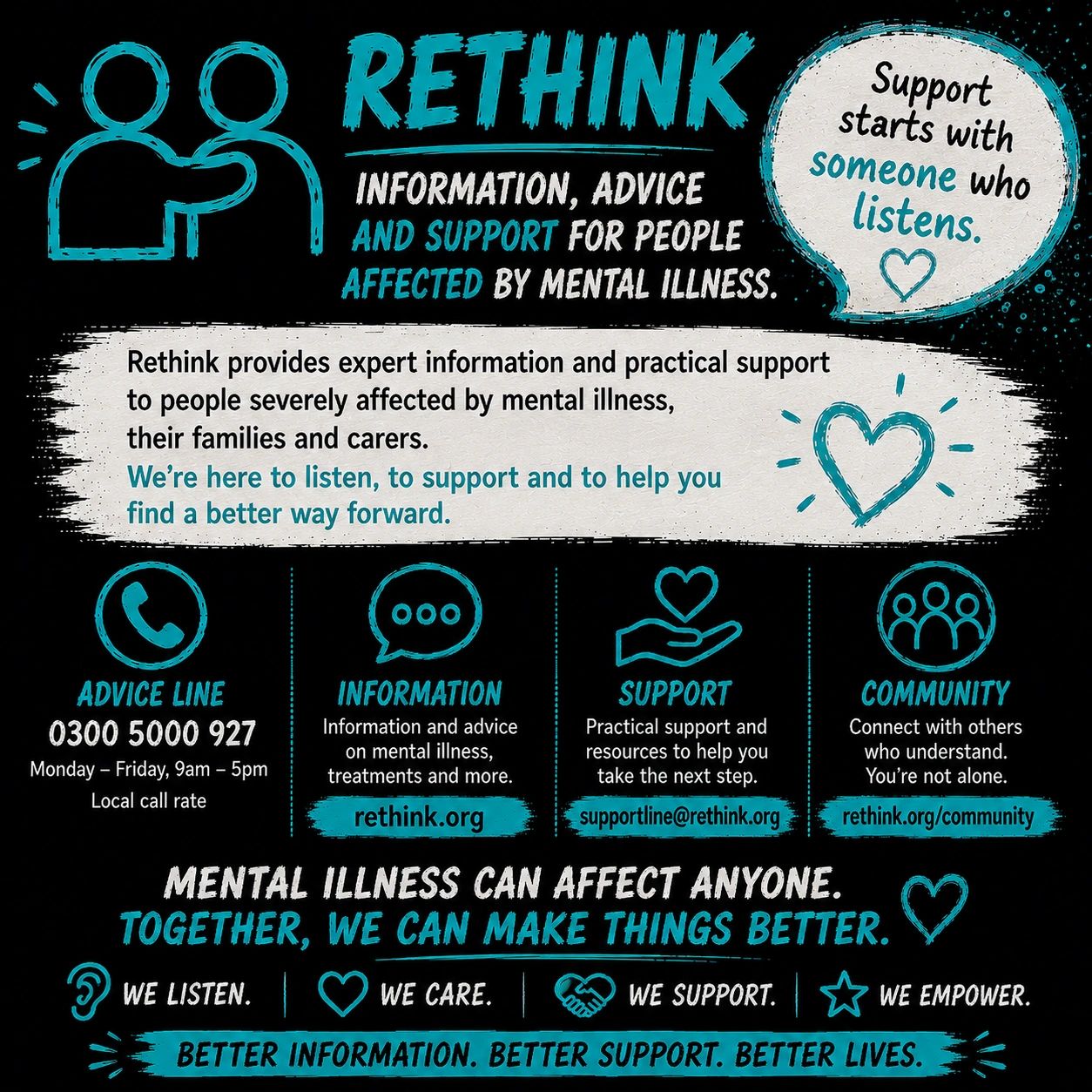
Rethink Mental Illness provides information, advice and support for people severely affected by mental illness, as well as their families, friends and carers. Their resources can help you better understand your situation and the options available.
From understanding mental health services and treatment to rights, benefits, housing and carers’ support, Rethink offers practical information for navigating some of the challenges that can accompany mental illness.
Rethink works to challenge stigma, improve mental health services and ensure people affected by mental illness have a voice. Their message is one of understanding, rights, support and hope for a better quality of life.
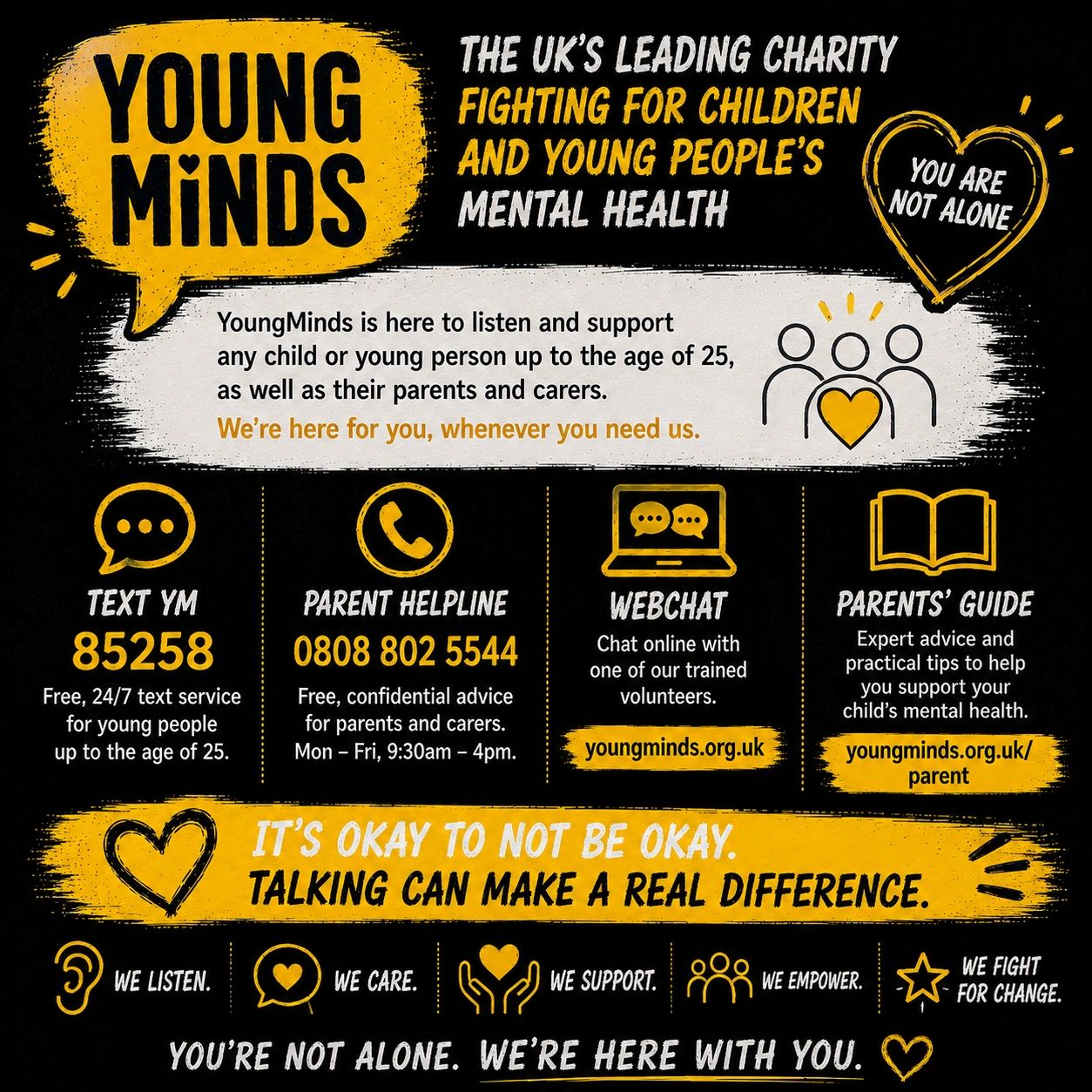
YoungMinds is a UK charity focused on the mental health and wellbeing of children and young people. It provides accessible information to help young people understand their feelings, mental health and where they can find support.
YoungMinds also supports parents and carers who are worried about a young person’s mental health. Its Parents Helpline and online resources can provide information, guidance and help with understanding possible next steps.
YoungMinds campaigns for a world where no young person feels alone with their mental health. By challenging stigma, improving understanding and giving young people a voice, it aims to ensure they can get appropriate support when they need it.
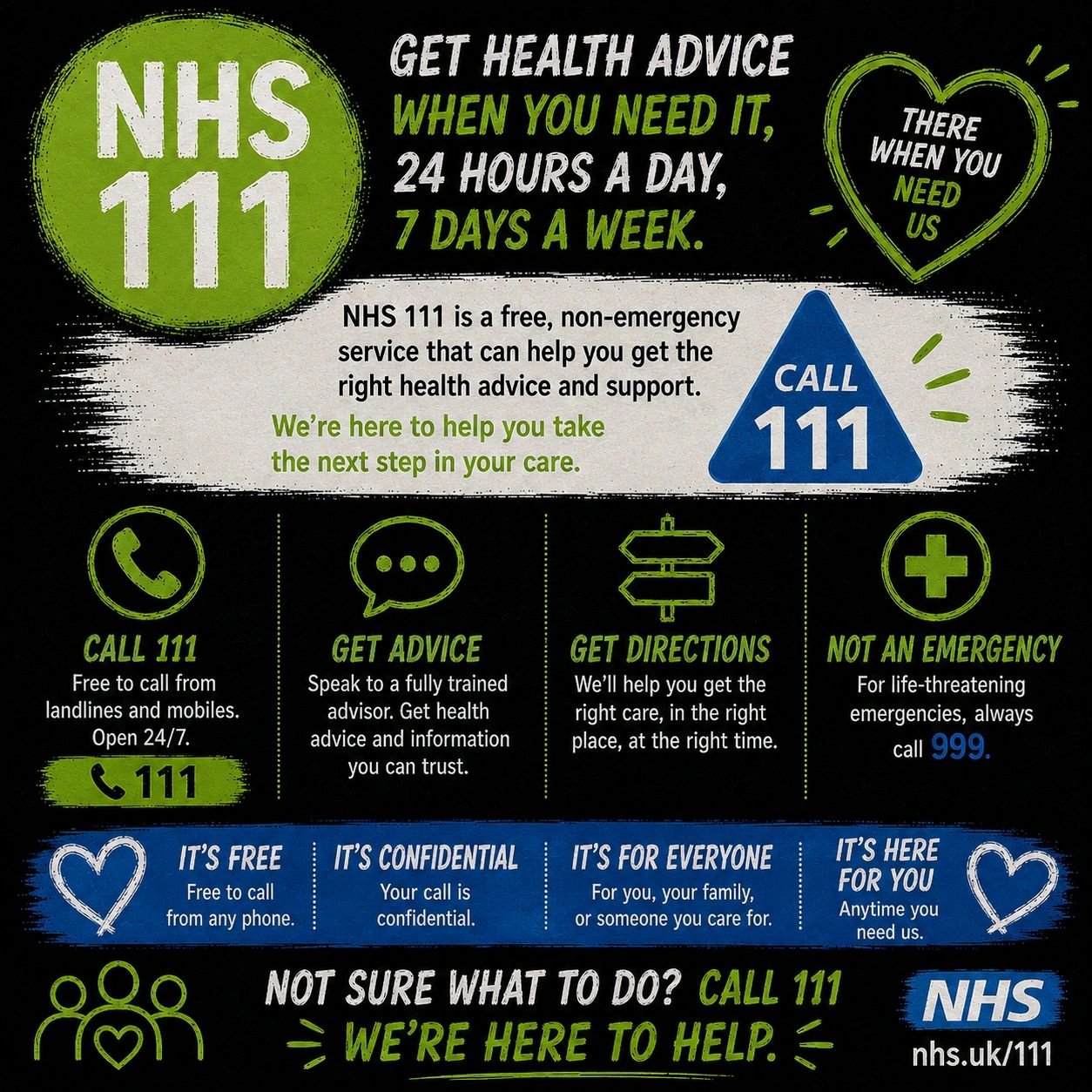
NHS 111 can help when you need medical or mental health support but it isn’t a life-threatening emergency. The service can assess what you need and direct you towards the most appropriate NHS care.
NHS 111 is free to call and available 24 hours a day, 7 days a week. In England, you can also select the mental health option when calling 111 if you need urgent mental health support.
NHS 111 can help connect you with appropriate services when you need urgent advice. If there is an immediate threat to life or serious danger, call 999 or attend an appropriate emergency department instead.
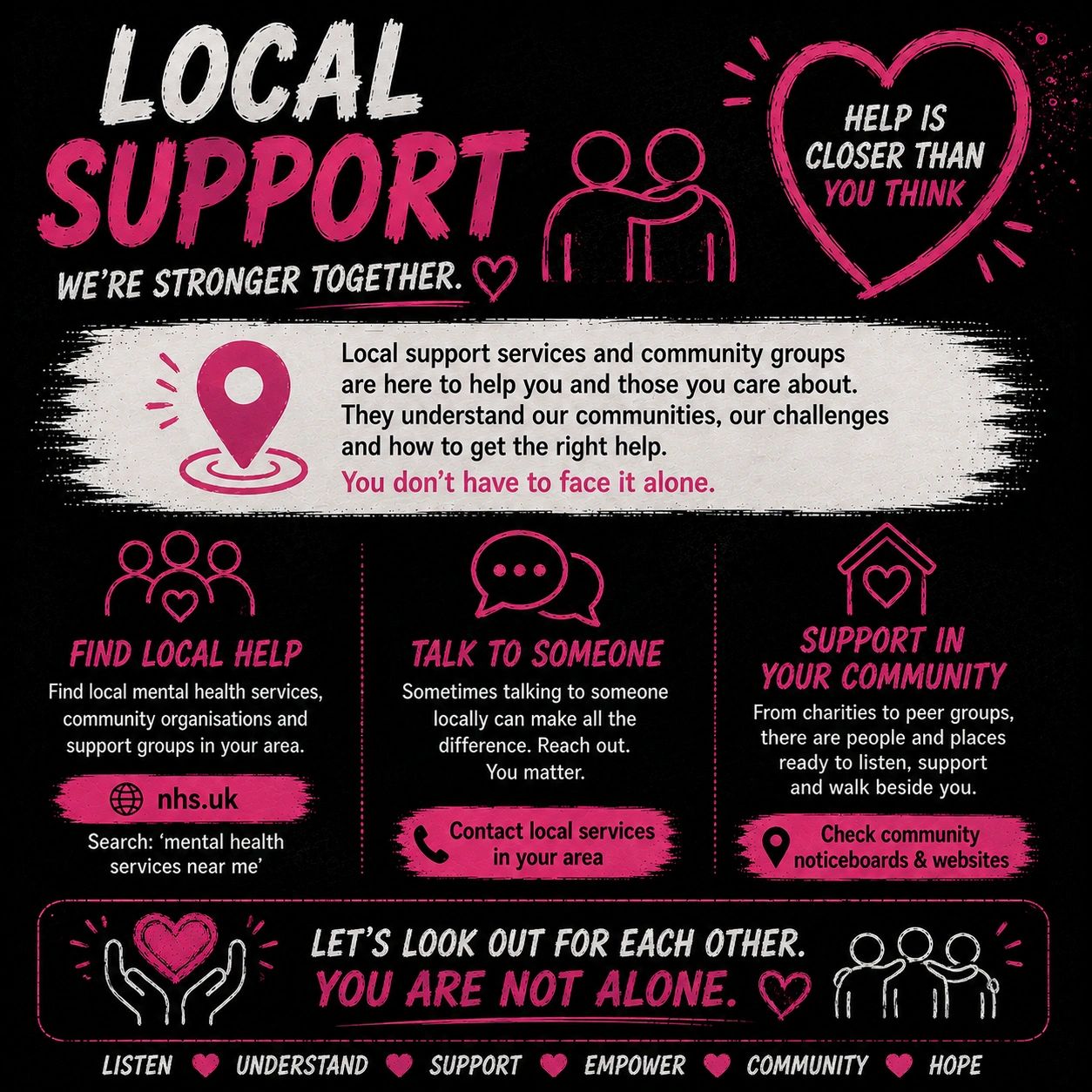
Local mental health services can provide support that’s specific to your area and circumstances. Your GP, NHS services, local charities and community organisations can all be useful starting points when you need help.
Support doesn’t always have to come from a national organisation. Local support groups, community services, peer networks and voluntary organisations can provide understanding, practical help and valuable connections close to home.
Services vary depending on where you live, so explore your local NHS, council and voluntary-sector resources to see what support is available. You may discover specialist services and community organisations you didn’t know existed.
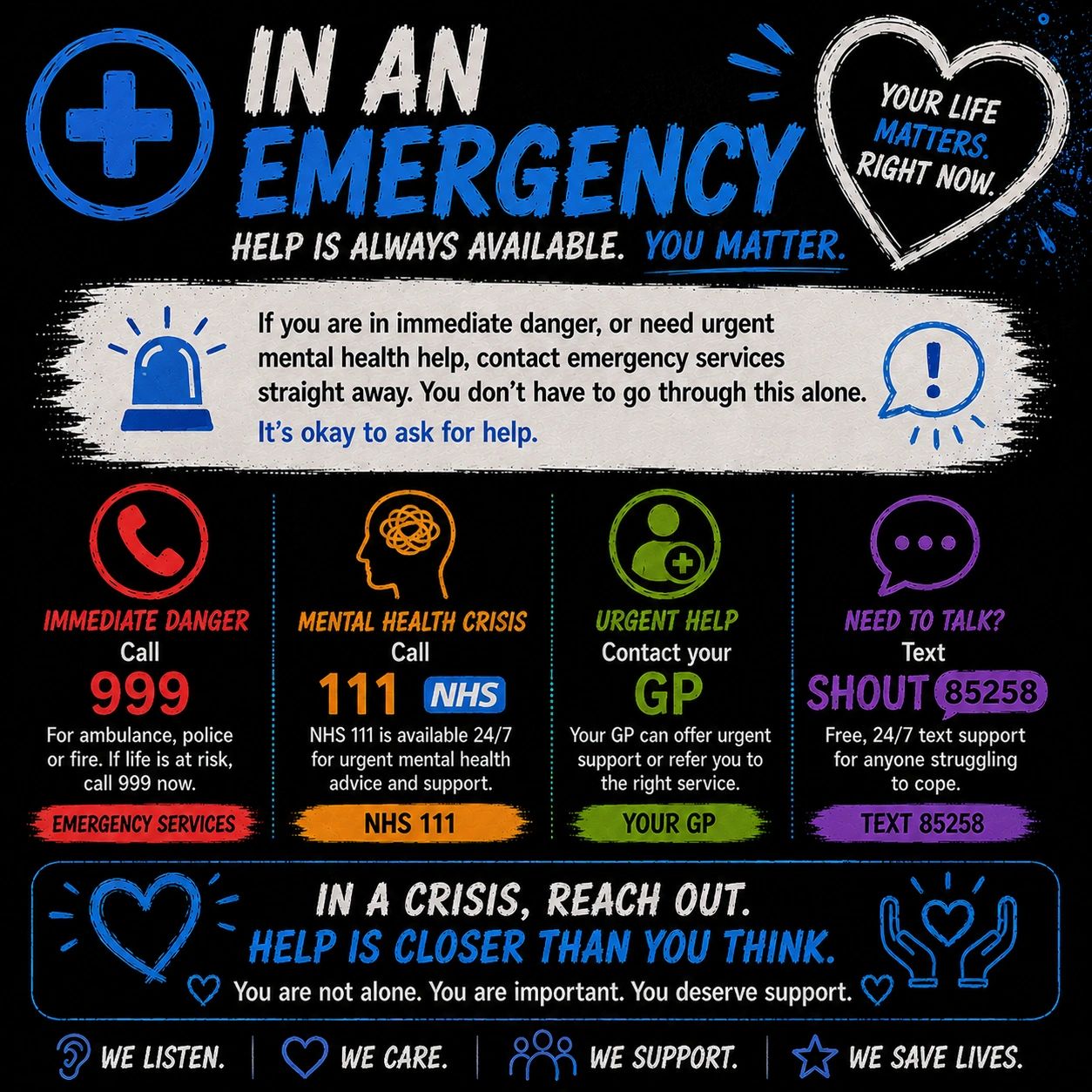
If you or someone else is in immediate danger, seriously injured or at immediate risk of harm, call 999 and ask for the appropriate emergency service. Mental health emergencies should be taken just as seriously as physical ones.
If you need urgent mental health support but there isn’t an immediate threat to life, contact NHS 111 and select the mental health option where available. They can help assess what is happening and direct you towards appropriate support.
In an emergency, the priority is safety and getting appropriate help quickly. Tell someone what is happening, stay with the person if it is safe to do so, and contact professional or emergency services rather than trying to manage a serious crisis alone.